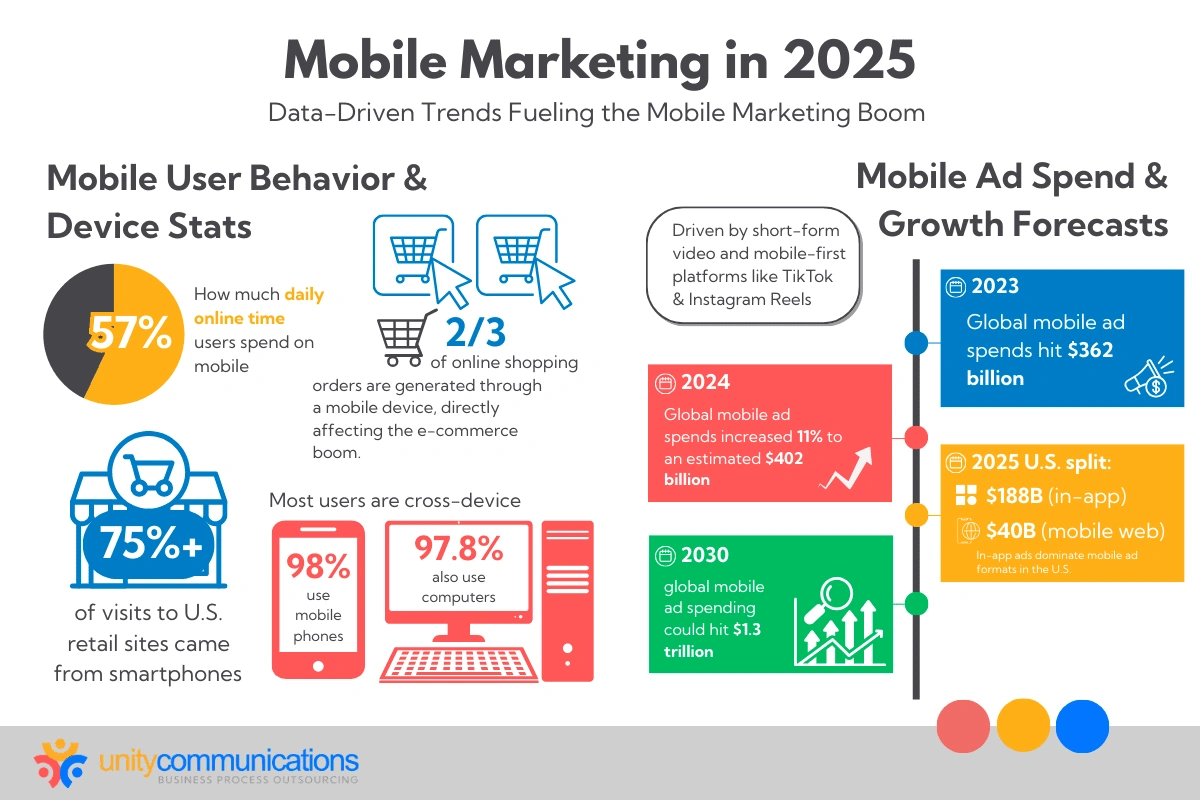
Recent mobile app statistics paint an impressive picture. Users spend 300% more time in mobile sessions , and brands' mobile apps have won over their websites with 64% of consumers . The future looks bright as 80% of marketers feel optimistic about 2025, and half of them report bigger budgets this year .
The statistics tell a powerful story. Mobile ad spending will reach $216 billion in 2025 , while mobile shopping will generate 72.9% of online sales . The digital-first approach to financial services has sparked a 27% surge in finance app installations during 2024, with sessions growing 24% .
Several factors fuel this momentum. Explore drag-and-drop screenshot editor to streamline this process. AI now helps 66% of marketers optimize their ad creatives, and 75% update them biweekly . Marketing strategies have evolved too - 43% of professionals now allocate a quarter or more of their budget to retention and reengagement efforts .
Let me tuck into the most effective mobile marketing trends for 2025 and share proven strategies that will boost your app's performance metrics.
Mobile-First Video Content Strategy

Image Source: Vidico
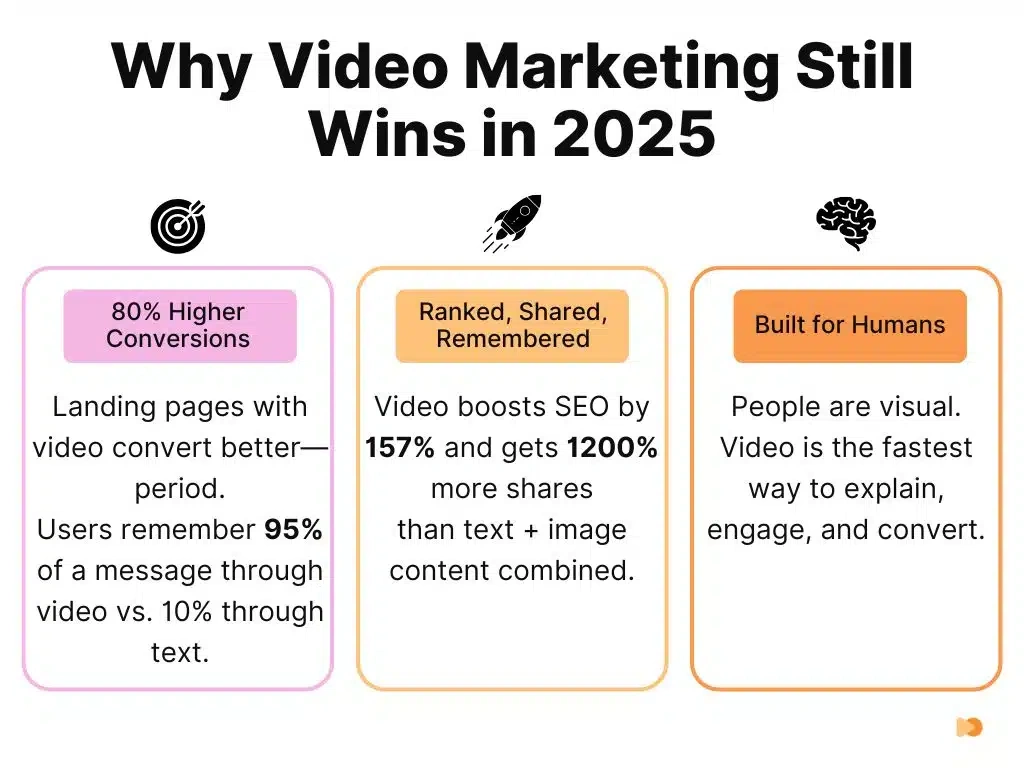
Video content leads mobile user acquisition, with 75% of all video views happening on mobile devices [1]. App marketers who treat mobile video like smaller TV content see their ad spending lose effectiveness.
Mobile-First Video Content Strategy Overview
Mobile-first video changes how we create content. Smart marketers now design videos specifically for smartphone users instead of adapting horizontal content to vertical screens. This strategy works because 82% of consumers say video shapes their buying decisions [2]. People spend about 5.4 hours on their phones each day [1].
Why Mobile-First Video Matters for App Downloads
Numbers show how video shapes app marketing trends. Users hold their phones vertically 94% of the time [1], which makes vertical formats feel natural. The competitive app marketplace gives you just 3 seconds to grab attention before users scroll away [1]. About 85% of Facebook users watch without sound [1], so your visual story needs to work silently.
Best Practices for Mobile Video in 2025
Your app needs more visibility and downloads. These strategies will help:
Format optimization: Vertical (9:16) or square (1:1) formats fill more screen space. LinkedIn's professional audience still responds better to horizontal (16:9) format [1].
Front-load value: Hook viewers by showing your core message and brand identity in the first 3 seconds [3].
Design for silent viewing: Add captions, bold text overlays, and clear visuals. Short, punchy copy works best for mobile-friendly video [3].
Keep it brief: Videos should run 15-60 seconds depending on platform. Most viewers (66%) share videos under one minute [4].
Embrace authenticity: Videos shot on smartphones often beat polished production because they look more natural [1].
Test continuously: Use 20-30% of your budget to test new ideas. Put the remaining 70-80% into what works [1].
Mobile video isn't just another channel for app marketers—it's where user acquisition happens in 2025.
Generational Mobile Behavior Insights

Image Source: SQ Magazine
Age differences shape how people use mobile apps, and each generation shows unique patterns in their usage. App marketers need to understand these differences to increase downloads and user involvement.
Generational Behavior Overview
Six distinct generational groups exist in society, each with their own mobile habits [2]. Young people lead app usage stats. Users aged 18-24 spend about 112.6 hours monthly on apps, while those 25-34 clock in 102.4 hours [5]. People over 35 spend less than 100 hours, and seniors above 65 use apps nowhere near as much - just 51.4 hours monthly [5].
Men and women show different app priorities. Women tend to use social media, shopping, and wellness apps more often. Men gravitate toward gaming, finance, and productivity tools [5]. Purchase patterns reveal that 62% of Generation Z and 61% of Millennials buy things through apps. This is a big deal as it means that they outspend older generations [5]. Gen Z stands out with 17% making daily in-app purchases [5].
Why Generational Trends Matter for App Downloads
Download and retention rates depend heavily on generational insights. Millennials show strong app loyalty - 21% open apps over 50 times daily [5]. Gen Z wields USD 450 billion in global spending power and makes up 40% of global consumers [3].
Gen Alpha will become the largest generation by 2025, surpassing Baby Boomers [2]. Smartphone adoption varies across generations. Gen X leads with 90% ownership, compared to Baby Boomers at 68% and the Silent Generation at 40% [4].
Best Practices for Targeting Generations in 2025
Gen Z (born 1997-2012) responds best to visual interfaces and short videos. YouTube remains their go-to platform for longer content, with 71% using it regularly [2]. They need single-handed use features with thumb-friendly buttons and authentic messaging [3].
Millennials (born 1981-1996) prefer Instagram advertising [2]. They actively respond to notifications - 84% interact with push alerts [6].
Gen X (born 1965-1980) values personal interaction over visual elements. Facebook remains their primary platform, with 81% having accounts compared to 71% on YouTube [6].
Baby Boomers (born 1946-1964) like text-based interfaces better than icon-driven designs. About 40% use retail apps to make purchases [2]. They need larger text, better contrast, and simple navigation options.
Voice and Visual Search Optimization

Image Source: Design In DC
The world of search keeps changing. Voice and visual search technologies are reshaping how people find and download mobile apps. Text-based searches are giving way to accessible methods that help users find information and products quickly.
Voice and Visual Search Overview
Voice search has gained huge momentum. It makes up about 20% of searches on the Google App, and mobile voice adoption has reached 27% of users [7]. Visual search lets users look up things with images instead of keywords. The use of image search has more than doubled since 2019 [8].
These technologies are changing how people search. Voice searches sound more like normal conversations. People ask full questions like "Where's the best coffee near me?" rather than typing short phrases [7]. Visual search helps users find products, places, or ideas when words fail them [8].
Why Voice and Visual Search Matter for App Downloads
App marketers now have new ways to reach users. About 62% of millennials prefer visual search over typing text [8]. Voice shopping could hit $164 billion worldwide by 2025 [5].
Voice searches often look for things nearby. Nearly half of all voice queries want local services or information [5]. Local apps can tap into this traffic by making their content voice-search friendly.
Best Practices for Search Optimization in 2025
Your app downloads will grow if you follow these tested methods:
Make it sound natural: Write content that matches how people talk and ask questions [7]
Answer common questions: Put clear answers in your app description and website [7]
Add structured data: Use schema markup to help search engines understand your app better [5]
Make images work harder: Use high-quality app screenshots with good descriptions and alt text [9]
Speed things up: Voice search favors faster-loading pages [5]
Mix your methods: Build app interfaces that work well with text, voice, and images together [5]
Apps that work well with both voice and visual search will stand out in the crowded app market. The technology keeps advancing, and smart optimization will make a big difference.
Mobile App UX and Performance Optimization

Image Source: WEZOM
User experience and performance are the foundations of successful mobile apps today. 53% of users abandon apps that take over three seconds to load [10]. The quality of interaction between users and apps plays a decisive role in the competition for downloads as mobile marketing trends change.
UX and Performance Overview
Mobile UX design includes how users interact with apps before, during, and after use [2]. The combination of visual design and technical performance creates a smooth experience for users. Better performance means faster loading, quick responses, and smart use of resources [11]. These elements determine whether users stay involved or remove an app right after trying it.
Why UX Optimization Matters for App Downloads
Numbers tell the real story - 57% of users won't recommend a business with a poorly designed mobile presence [2]. On top of that, approximately 25% of app installs result in just a single session [12]. This shows how vital first impressions are in mobile marketing. Bad performance affects app store rankings, visibility, and download numbers [13].
Best Practices for UX in 2025
Here's what you need to focus on for the best user experience in 2025:
- Balance visual appeal with performance - Find the sweet spot between great design and speed. Smooth animations make apps feel responsive without slowing down devices [14]
- Keep design simple - Clean interfaces help users understand information better and run faster, especially on cheaper phones [14]
- Think about thumb reach - Design based on how people hold their phones. Put important buttons where thumbs can easily reach them [2]
- Make small interactions count - Add subtle feedback like button animations that show users their taps worked, without creating lag [11]
- Try it on different phones - Make sure your app works well on various models and screen sizes [14]
These practices improve both your app's look and speed. This combination drives downloads and keeps users coming back in 2025's competitive market.
Real-Time Personalization Engines

Image Source: Pragmatic Coders
The app-driven economy has transformed individual-specific experiences from a luxury into a necessity. Statistics show that 71% of consumers now expect personalized interactions [3]. This transformation has made up-to-the-minute personalization engines lead mobile marketing trends for 2025.
Real-Time Personalization Overview
Up-to-the-minute personalization provides custom content, offers, and experiences based on user behavior and priorities. The system adapts instantly to live customer interactions on websites, apps, and messaging channels [15], unlike traditional personalization that depends on static or historical data [16]. The system gathers data from multiple sources—website interactions, email campaigns, mobile apps—and creates a unified customer view that makes millisecond-level decisions possible [4].
Why Real-Time Personalization Matters for App Downloads
Personalization's effect on app performance cannot be disputed. Companies that implement up-to-the-minute personalization earn up to 40% higher revenue than their competitors [6]. Customer data shows that 74% of users feel frustrated when content isn't personalized [6] and quickly abandon apps. Custom onboarding reduces early drop-off rates by a lot [3].
Recent data proves that personalization cuts customer acquisition costs by as much as 50% [17]. This advantage is vital in today's competitive app marketplace. Companies achieve an average ROI of 300% within a year after implementing AI-powered personalization [17].
Best Practices for Personalization Engines in 2025
Your up-to-the-minute personalization strategy should:
- Start with meaningful data – Live behavioral signals matter most, including browsing patterns, search inputs, and cart changes that update in milliseconds [16]
- Unify your data sources – Build a complete customer view that combines web, mobile, email, in-product, and CRM interactions [16]
- Exploit AI for decisions – AI models should continuously improve recommendations and predict user intent [4]
- Test continuously – Experiments with timing, content, and format optimize performance and customer satisfaction [16]
- Ensure cross-channel consistency – Users need smooth personalized experiences as they switch between email, apps, websites, and other touchpoints [4]
Mobile apps can create highly relevant experiences through contextual elements like location, weather, and device type. These factors help boost downloads and user participation over time [4].
Integrated Mobile Tech Stacks

Image Source: Umbrex
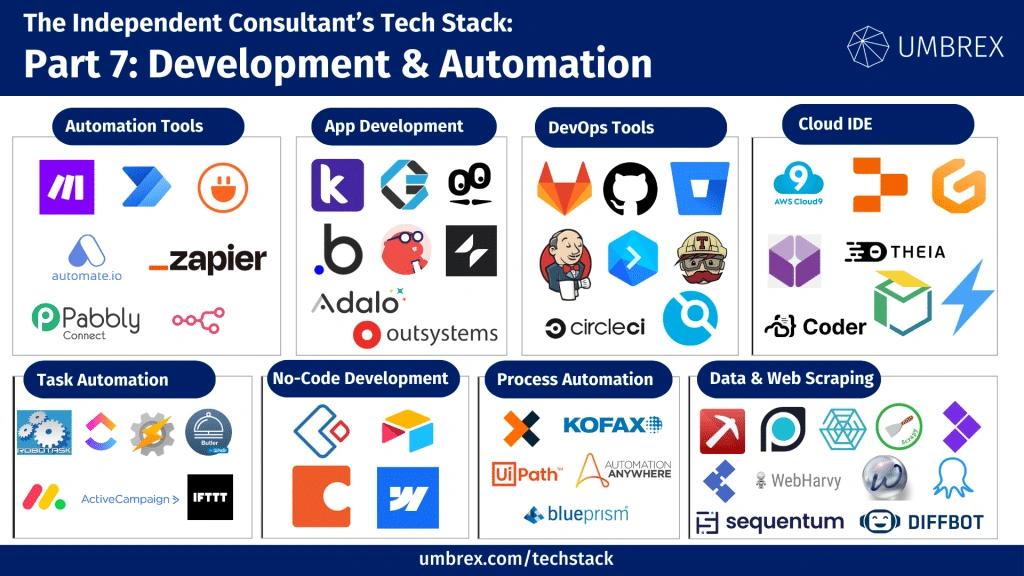
The right technology ecosystem forms the foundation for successful mobile applications in 2025. Tech integration can dramatically boost user acquisition and retention. This makes it a vital component of current mobile marketing trends.
Integrated Tech Stack Overview
Your app's functionality relies on an integrated mobile tech stack - a complete assembly of technologies. Explore unified app store optimization suite to streamline this process. Marketing automation, segmentation tools, analytics platforms, and personalization engines merge naturally with each other. Effective stacks help data flow consistently between systems. This creates unified customer profiles and experiences. Brands need interconnected technologies to deliver cohesive experiences across all touchpoints as smartphone usage grows.
Why Integration Matters for App Downloads
Integrated tech stacks significantly affect app performance. Users crave relevant, tailored experiences that properly integrated systems provide. This keeps them involved and coming back for more [18]. Broken, frustrating experiences from disconnected technologies push users away and increase churn. A unified tech stack allows up-to-the-minute data collection and analysis. Marketers can understand customer experiences better and find the best moments to connect [19]. This detailed view helps develop better strategies for customer retention and acquisition.
Best Practices for Mobile Tech in 2025
Your tech stack will work better if you:
- Prioritize scalability – Pick frameworks that support vertical scaling (adding power to existing machines) and horizontal scaling (adding more machines) [20]
- Focus on security – Select tools with built-in protection features, especially for apps with sensitive data [20]
- Centralize your data – Build a single source of truth for consistent reporting and analytics [5]
- Automate workflows – Set up systems that communicate automatically to eliminate manual processes [5]
- Balance cost and performance – Evaluate development expenses alongside technical capabilities [20]
These practices will help your mobile marketing tech ecosystem deliver smooth, tailored experiences. This drives both downloads and long-term engagement.
Privacy-By-Design Mobile Analytics
Image Source: Usercentrics
Mobile users care more about privacy than ever before. 54% of app users decide not to install apps when they learn about data collection practices [21]. This transformation has made privacy-by-design one of the most important mobile marketing trends to watch in 2025.
Privacy-By-Design Overview
Dr. Ann Cavoukian developed Privacy-by-Design (PbD) in the 1990s [22]. This method builds privacy safeguards from the start instead of trying to modernize them later. What started as an ethical choice has become a business necessity. We learned that 80% of data collected by apps is used for purposes unrelated to core functionality [21]. The numbers get worse - 60% of apps collect data to track users across different applications and advertising networks [21].
Why Privacy-By-Design Matters for App Downloads
Privacy concerns significantly affect app performance. Apple's mandatory privacy labels in its App Store led apps to face an average 14% decrease in weekly downloads and a 15% drop in revenue compared to Google Play versions [21]. Apps that collect tracking data suffered even more, with declines 2.2 times larger than those that don't [23].
Privacy practices shape company values too. Companies that released apps collecting extensive data saw their six-month stock returns between 5.74% and 8.17% lower after privacy label disclosure [21]. Popular apps with bigger market share didn't take such a big hit [23].
Best Practices for Privacy in 2025
These practices will help you protect user privacy:
- Collect minimal data – Stick to information you need for core features [8]
- Implement privacy as default – Privacy should work without user input [9]
- Ensure end-to-end security – Use strong encryption to protect personal information during transfer and storage [8]
- Maintain transparency – Show clear information about data practices when users need it [24]
- Enable user control – Make it as easy to opt out as it is to opt in [24]
Mobile analytics needs special attention. Privacy-first solutions that track non-personal data without cookies or user identifiers work well [25]. These tools help you follow regulations and still learn about your app's performance.
Mobile App Advertising Trends in Social Media

Image Source: We Are Social
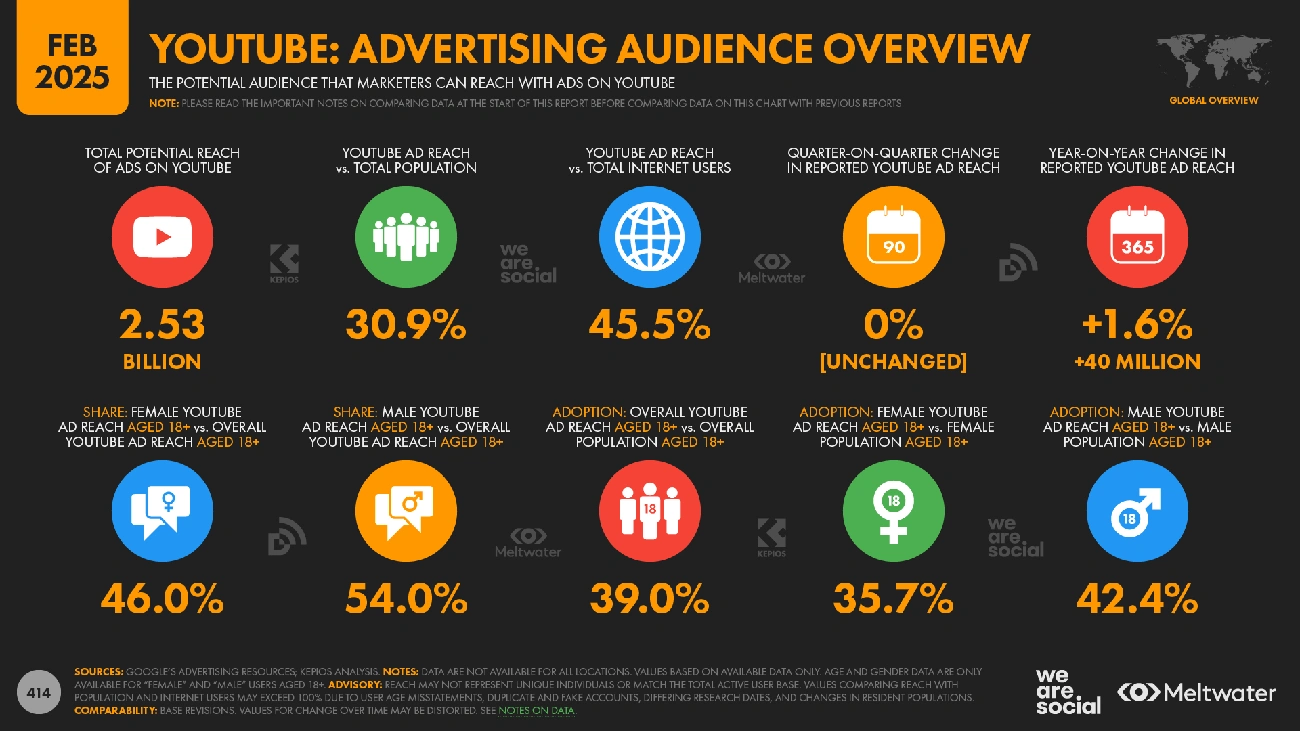
Social media platforms have emerged as powerful channels for app promotion. Global mobile app install ad spend will reach USD 118.40 billion by 2025 [26], a dramatic increase from USD 76.20 billion in 2020.
Mobile Advertising Overview
The app advertising world has changed significantly. Marketers now use various formats beyond traditional display ads. Playable ads let users try mini-versions of apps before downloading [27]. Rich media ads include dynamic elements like video and animations that boost user participation [27]. All the same, results differ by platform. Facebook offers the lowest average Cost Per Install at USD 1.80, while Twitter costs USD 2.53 and Instagram USD 2.23 [26].
Why Social Media Ads Matter for App Downloads
Social media disrupts how people find apps. About 40% of users buy products based on direct recommendations from influencers [28]. Instagram shows an impressive 4.7% average engagement rate, which is much higher than Facebook's 0.72% and Twitter's 0.25% [29]. Many unknown apps gain popularity through targeted advertising. Off the top of my head, I found Stitch Fix through an Instagram ad and downloaded it right away [30].
Best Practices for Mobile Ads in 2025
Your social media advertising can work better when you:
- Target strategically - Use detailed audience segmentation based on demographics, interests, and behaviors [31]
- Test continuously - Track metrics like impressions, clicks, installs, and cost per install (CPI) to improve campaigns [31]
- Create compelling visuals - Match ad creatives with your app's branding and value proposition [31]
- Vary platforms - Research shows advertisers who use six or more ad networks perform better than those using fewer [32]
Costs keep rising, but smarter analytics and stronger creative can justify higher acquisition costs [32]. The focus isn't just getting cheap installs—it's finding profitable users who create long-term value.
App Store Optimization (ASO) Evolution

Image Source: LinkedIn
App Store Optimization (ASO) has become the foundation of how people find mobile apps. The numbers tell the story - 70% of App Store visitors use search to find new apps and 65% of downloads happen right after a search [7].
ASO Overview
ASO is a step-by-step way to make apps more visible in app stores by fine-tuning their metadata. Explore AI-powered metadata generation to streamline this process. Just like SEO helps websites rank better, ASO helps apps show up higher in store searches and recommendations. It's all about getting the key pieces right - the app title, description, visuals, keywords, and ratings. These elements help people find your app and decide to download it. Apple and Google use smart algorithms that look at keywords, how users interact with apps, and how relevant they are to searches [33].
Why ASO Matters for App Downloads
Good ASO makes a real difference in how well apps perform. It brings in the right kind of users - people who are looking for exactly what your app offers [7]. Higher-ranking apps also look more reliable to potential users. The business side makes sense too. ASO is a more affordable way to grow compared to paid ads [7]. The truth is, great apps can stay hidden in the crowd without proper optimization [34].
Best Practices for ASO in 2025
Here's what works best for ASO:
- Screenshot captions matter now - Apple looks at the text in your screenshot captions when ranking searches, so this often-missed detail is vital [35]
- Pick your keywords wisely - Put your best keywords in the app title first, then the subtitle, and use the hidden keyword field for unique terms [36]
- Keep those ratings high - You want at least a 4.0-star average, so ask for reviews when users are happiest with your app [34]
- Stay fresh with updates - App stores like to see regular updates, and this might help your app show up more often [7]
- Think globally - Make your app listings work for different countries and languages to reach more people worldwide [7]
Mobile Email and Push Notification Strategy

Image Source: Airship
Email marketing and push notifications serve as direct lines to mobile users. Email marketing yields an impressive 3600% ROI—approximately USD 36.00 for every dollar spent [14]. These channels have become the foundations of today's mobile app marketing world.
Mobile Messaging Overview
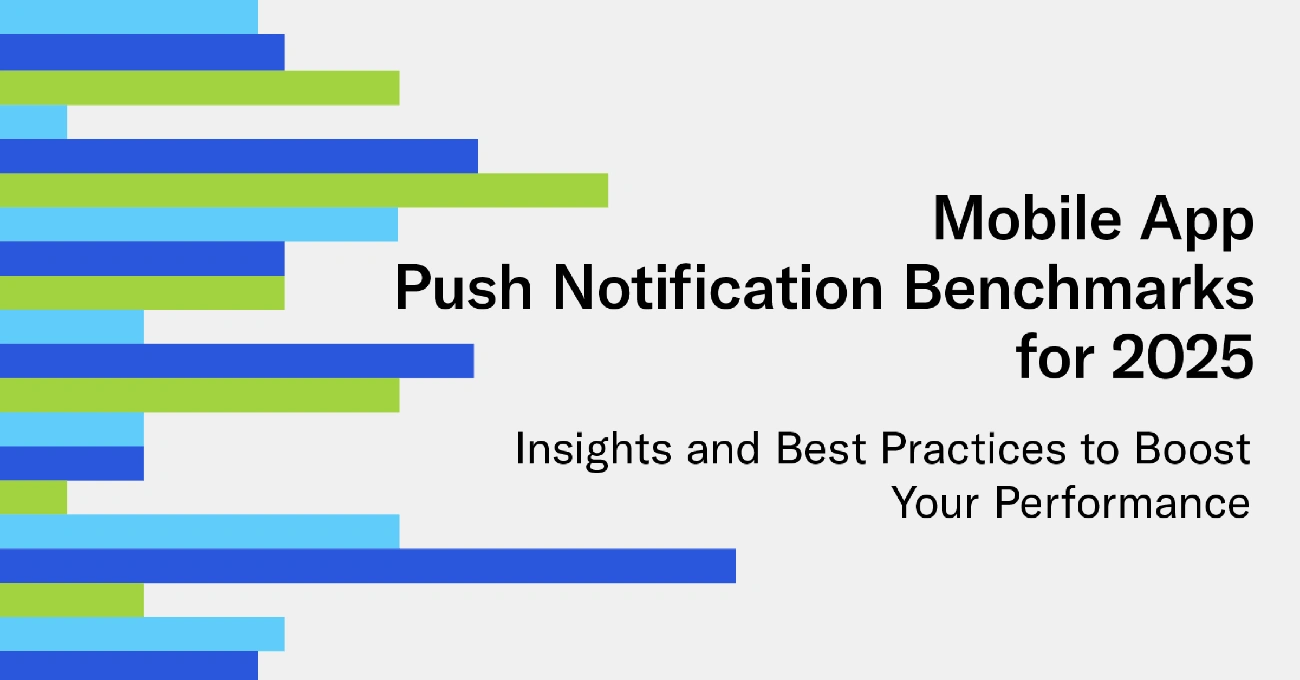
These messaging strategies work differently but complement each other well. Email offers a reliable way to reach users with detailed content. Push notifications deliver time-sensitive information right to users' screens. Users open push notifications 50% more often than emails [37], as they appear instantly on lock screens. Context-based push notifications that trigger from specific user actions get 14.4% open rates compared to just 4.19% for generic campaigns [38].
Why Email and Push Matter for App Downloads
These channels affect user acquisition and retention significantly. Users who get push notifications during their first 90 days stay one-third longer than those who don't [39]. On top of that, email remains the favorite way for millennials and Gen Z to hear from brands, with 79% and 57% preferring it respectively [14]. Both channels help bring users back to abandoned carts, tell them about updates, and remind them about features they haven't tried.
Best Practices for Messaging in 2025
Here's what works best in 2025:
- Make it personal—emails with tailored content get 27% higher click rates [14]
- Think mobile first—over 41% of email views happen on mobile devices [14]
- Time it right—adjust your sending schedule based on user behavior
- Add rich media—interactive content gets 52.6% more engagement than static content [14]
- Send relevant notifications when users need them most
Augmented Reality in Mobile Marketing

Image Source: Overly app
AR has become a game-changer in app marketing. The mobile AR market will reach USD 36 billion by 2026 [40]. This technology changes how consumers connect with brands through their mobile devices.
AR in Mobile Marketing Overview
AR technology adds digital information to what we see around us. It makes our existing surroundings better instead of creating a new reality [12]. Users can see virtual objects right next to them through their device cameras [40]. The technology has grown beyond being just a novelty. Retail, gaming, and educational sectors now use it extensively. AR lets customers try products virtually, see interactive demos, and experience location-based features that boost user involvement.
Why AR Matters for App Downloads
AR significantly boosts app performance. Users who try AR features spend 20.7% more time in apps and look at 28% more products [40]. They are also 19.8% more likely to buy something compared to others [40]. AR creates moments worth sharing that generate natural marketing. People who experience AR often tell others about the brand through their social networks [12]. The technology turns simple browsing into active participation.
Best Practices for AR in 2025
These practices help AR work better:
- Virtual try-ons should be your priority—61% of consumers prefer retailers offering AR experiences [40]
- Make it practical—IKEA Place shows how furniture looks in your home while L'Oréal lets you test makeup virtually [13]
- Track everything—monitor engagement metrics and conversion rates to show ROI [41]
- Support all platforms—build for both iOS ARKit and Android ARCore [42]
Mobile App Development Trends for 2025

Image Source: Buildfire
The mobile app development industry continues to flourish, and global market value is projected to surge from USD 195.70 billion in 2023 to USD 606.10 billion by 2032 [43]. This phenomenal growth reshapes how businesses create apps to maximize downloads.
Mobile App Development Overview
Businesses of all sizes throughout the USA and Canada now make enterprise mobility their priority, with 73% recognizing mobile apps as crucial for competitive advantage [44]. Technology advancements have changed development approaches fundamentally. Artificial intelligence, cloud computing, and low-code platforms have emerged as dominant forces. Developers and marketers alike now have countless opportunities through on-demand applications [2].
Why Development Trends Matter for App Downloads
Development trends shape download rates throughout the app lifecycle. Cloud storage technology improves app performance significantly at the user's end [2]. Predictive analytics helps forecast user behavior to deliver customized experiences [43]. App stores potentially improve visibility rankings when developers maintain regular updates [2]. Users now reject apps with questionable data practices, making security implementation non-negotiable.
Best Practices for App Development in 2025
To maximize downloads in 2025:
- Use AI for customized experiences—89% of US marketers report increased revenue from personalization [45]
- Add multi-factor authentication and industry-standard encryption [45]
- Think over low-code platforms to speed up development and testing [2]
- Make apps 5G-ready—subscriptions will exceed 4.3 billion by 2026 [46]
- Create clean user interfaces by removing unnecessary features [44]
Behavioral Analytics and User Journey Mapping

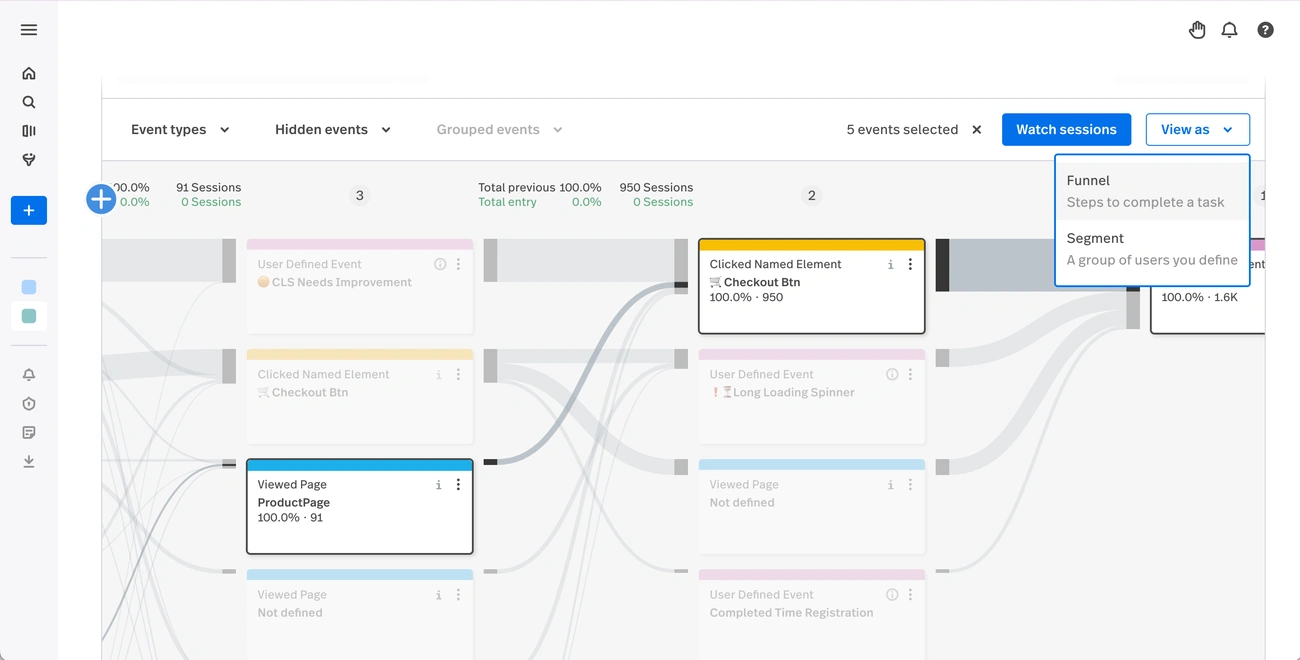
Image Source: Fullstory
Behavioral analytics has become fundamental in mobile app marketing. Explore learn what ASO means and how it works to streamline this process. Data serves as the life-blood for all successful applications in the competitive marketplace. Companies that utilize proper analytics tools can see user behavior patterns and make informed decisions about product development and marketing.
Behavioral Analytics Overview
Behavioral analytics helps track and analyze user interactions within digital products to learn applicable information [47]. This approach extends beyond standard metrics like page views or downloads. It focuses on what users actually do—their clicks, swipes, form completions, and purchase behaviors. Mobile app analytics tools monitor virtually every touchpoint, which includes daily active users, session duration, event-based interactions, and cohort behavior over time [48]. Users' movement through an app creates a complete picture that identifies both pain points and moments when users participate.
Why User Journey Mapping Matters for App Downloads
App downloads depend heavily on user journey mapping that reveals the path from discovery to participation. Mobile session duration has skyrocketed by over 300% year-over-year. However, error-related session exits jumped 254% and bounce rates increased 54% during the same period [49]. Marketers can identify weak points and optimize experiences by understanding user journeys. This becomes critical since 25% of app installs result in just a single session. These journeys clarify user needs, goals, and expectations at each stage, which allows for customized interventions that boost conversion and retention [50].
Best Practices for Behavioral Analytics in 2025
The following practices help achieve optimal results with behavioral analytics:
- Define clear goals – Start with specific questions you need answered, not just data you can collect [11]
- Track meaningful events – Focus on behaviors tied to user needs and conversion goals [10]
- Segment your audience – Group users based on behaviors for targeted marketing [51]
- Analyze drop-offs – Find where users abandon processes through funnel analysis [52]
- Implement live analytics – Respond to user behavior immediately [51]
Comparison Table
| Mobile Marketing Trend | Key Statistics/Effect | Main Benefits | Best Practices | Implementation Tips |
|---|---|---|---|---|
| Mobile-First Video Content | 75% of video views on mobile; 3-second attention window | Higher engagement rates; Better user acquisition | Use vertical (9:16) format; Value first 3 seconds; Include captions | Design for silent viewing; 15-60 seconds works best |
| Generational Mobile Behavior | 18-24 age group: 112.6 hours monthly on apps; 62% of Gen Z make in-app purchases | Targeted user acquisition; Better retention rates | Adapt UI/UX by generation; Match age groups to platforms | Account for age-specific usage patterns |
| Voice/Visual Search | 20% of Google App searches are voice; Image search doubled since 2019 | New ways to find content; Local targeting | Optimize for natural keywords; Add structured data | Focus on natural speech; Quality image details |
| UX/Performance Optimization | 53% abandon apps after 3-second load time; 25% single-session installs | Higher retention; Better app store rankings | Mix visual appeal with speed; Use simple design | Test on actual devices; Design for thumb reach |
| Immediate Personalization | 71% expect personalized interactions; 40% higher revenue | Lower acquisition costs; 300% ROI | Begin with useful data; Connect data sources | Match across channels; Add AI features |
| Integrated Tech Stacks | Not specifically mentioned | Smooth user experience; Better data flow | Make it scalable; Keep data central | Match cost to performance; Keep it secure |
| Privacy-By-Design Analytics | 54% avoid apps due to data collection; 14% download decrease without privacy | Better user trust; Meet regulations | Collect essential data; Make privacy default | Full security; Let users control data |
| Social Media Advertising | $118.40B projected ad spend by 2025 | Lower acquisition costs; Higher engagement | Target smart; Test often | Mix platforms; Watch spending |
| App Store Optimization | 70% visitors use search; 65% downloads post-search | Better visibility; Cost-effective growth | Write better captions; Update regularly | Keep ratings high; Think local |
| Email/Push Notifications | 3600% ROI for email; 50% higher open rates for push | Higher retention; Better re-engagement | Make it personal; Design for mobile | Balance timing and frequency |
| Augmented Reality | $36B market by 2026; 20.7% longer app usage | Higher engagement; More purchases | Focus on useful features; Virtual try-ons | Work across platforms |
| Mobile App Development | $606.10B market by 2032 | Edge over competition; Better performance | Add AI; Build in security | Ready for 5G; Put users first |
| Behavioral Analytics | 300% increase in session duration; 25% single-session rate | Know users better; Targeted actions | Set clear goals; Track key events | Get instant insights |
Conclusion
Mobile marketing trends point toward a more personal, privacy-conscious, and tech-advanced future. Explore advanced ASO optimization techniques to streamline this process. This piece gets into thirteen key strategies that can boost your app downloads by a lot in 2025.
Users' expectations have changed. Mobile-first video content and generational targeting are no longer optional - they're must-haves. Voice and visual search optimization creates new ways to find your app, and smart marketers need to use these to compete.
Speed is critical now. Apps that take more than three seconds to load lose over 50% of users. Those using immediate personalization earn 40% more revenue than their competitors.
Your full attention should go to privacy concerns. Users skip downloading apps that mishandle their data. Privacy-by-design isn't just ethical - it's vital to grow your business responsibly.
Marketing channels keep changing faster. Explore effective user acquisition approaches to streamline this process. Social media ads, app store optimization, email marketing, and push notifications are vital parts of a complete strategy. These channels work best together rather than alone.
AR technology needs serious thought, since AR users spend 20.7% more time in apps and view 28% more products than others. These engagement numbers lead straight to better conversion rates.
Behavioral analytics forms the foundation of all these strategies. Understanding your users' trips shows ways to improve every part of your funnel.
The mobile world might look overwhelming, but you don't need to use all thirteen trends right away. Begin with strategies that match your audience and business goals. Keep testing, track your results, and adjust your plan. Mobile marketing never stops evolving, but these proven trends will guide you to drive more app downloads in 2025 and beyond.
FAQs
Q1. Explore generate ASO-optimized metadata to streamline this process. How can I optimize my app for voice and visual search in 2025? To optimize for voice and visual search, focus on conversational keywords, create FAQ-style content, implement structured data, enhance image quality and metadata, and ensure your app is mobile-friendly with fast loading times.
Q2. What are the key elements of a successful mobile-first video content strategy? A successful mobile-first video strategy includes using vertical (9:16) or square (1:1) formats, front-loading your core message within the first 3 seconds, designing for silent viewing with captions and text overlays, keeping videos brief (15-60 seconds), and embracing authenticity in content creation.
Q3. How important is personalization for mobile app success in 2025? Personalization is crucial for mobile app success in 2025. Implementing real-time personalization can lead to up to 40% higher revenue compared to competitors. Focus on collecting meaningful data, unifying data sources, leveraging AI for decisioning, and ensuring cross-channel consistency in personalized experiences.
Q4. What role does privacy play in mobile app marketing? Privacy plays a significant role in mobile app marketing. With 54% of users avoiding apps due to data collection concerns, implementing privacy-by-design principles is essential. Collect minimal data, make privacy the default setting, ensure end-to-end security, maintain transparency, and give users control over their data.
Q5. How can behavioral analytics improve my app's performance? Behavioral analytics can significantly improve app performance by providing insights into user interactions. Define clear goals, track meaningful events, segment your audience, analyze drop-offs, and implement real-time analytics. This approach helps identify pain points, optimize user experiences, and drive both conversions and retention.
References
[1] - https://advids.co/insights/the-mobile-first-video-strategy-driving-app-installs-and-engagement
[2] - https://buildfire.com/mobile-app-development-trends/
[3] - https://www.appcues.com/blog/benefits-of-personalization
[4] - https://www.salesforce.com/marketing/personalization/real-time/
[5] - https://www.assetpanda.com/resource-center/blog/the-benefits-of-unifying-your-tech-stack-with-integrations/
[6] - https://www.bloomreach.com/en/blog/what-is-real-time-personalization
[7] - https://www.semrush.com/blog/app-store-optimization/
[8] - https://www.appknox.com/resources/guides/mobile-privacy-implementation-guide
[9] - https://usercentrics.com/guides/data-privacy/data-privacy-trends/
[10] - https://userpilot.com/blog/app-user-behavior/
[11] - https://www.glassbox.com/behavioral-analytics/
[12] - https://www.sciencedirect.com/science/article/abs/pii/S0148296320305439
[13] - https://www.adjust.com/blog/virtual-augmented-reality-mobile-marketing/
[14] - https://www.adjust.com/blog/email-marketing-for-mobile-apps/
[15] - https://useinsider.com/real-time-personalization-software/
[16] - https://www.braze.com/resources/articles/real-time-personalization
[17] - https://www.optimizely.com/insights/blog/what-is-a-personalization-engine-a-complete-guide/
[18] - https://www.braze.com/resources/articles/tech-ecosystems-martech-stacks-overview
[19] - https://resources.hypeanddexter.com/blog/5-reasons-you-need-an-integrated-tech-stack-for-optimal-performance
[20] - https://medium.com/@shailendrasingh.qwi/how-to-choose-a-winning-mobile-app-tech-stack-in-2025-ee581edbd8af
[21] - https://knowledge.wharton.upenn.edu/article/how-data-privacy-concerns-impact-firm-performance/
[22] - https://appdevelopmentcompanies.co/mobile-app-development/privacy-by-design-in-2025-winning-user-trust-in-next-gen-app-development
[23] - https://www.businessthink.unsw.edu.au/articles/data-privacy-mobile-apps-downloads-labels
[24] - https://www.cnil.fr/en/mobile-applications-cnil-publishes-its-recommendations-better-privacy-protection
[25] - https://www.simpleanalytics.com/
[26] - https://www.preapps.com/blog/which-ad-type-drives-app-downloads/
[27] - https://www.adjust.com/resources/guides/mobile-app-marketing/
[28] - https://www.magenative.com/blog/how-to-promote-an-app-on-social-media/
[29] - https://www.nasp.com/blog/how-to-promote-your-app-on-social-media-5-most-effective-measures-to-consider/
[30] - https://www.appcues.com/blog/app-launch-social-media-promotion
[31] - https://zoomd.com/mobile-app-marketing-strategies-for-boosting-app-installs/
[32] - https://www.singular.net/blog/mobile-app-marketing-strategy-trends/
[33] - https://www.apptweak.com/en/aso-blog/app-store-optimization-aso-best-practices
[34] - https://www.adjust.com/resources/guides/app-store-optimization/
[35] - https://www.yellowhead.com/blog/aso-updates-the-app-store-algorithm-change-is-knocking-out-apps/
[36] - https://www.consultmyapp.com/blog/understanding-the-app-store-algorithm-2025-challenges-and-best-practices-for-aso-success
[37] - https://www.dynamicyield.com/lesson/push-notifications-strategy/
[38] - https://batch.com/ressources/etudes/benchmark-notifications-push-crm-mobile
[39] - https://www.airship.com/blog/push-notification-strategy-customer-retention/
[40] - https://www.netguru.com/blog/augmented-reality-mobile-app-development
[41] - https://artilleryiq.com/reports/ar-marketing-best-practices-case-studies-volume-ii/
[42] - https://www.iab.com/wp-content/uploads/2019/10/IAB-AR-for-Marketing-Playbook-FINAL-June-2019.pdf
[43] - https://adapty.io/blog/mobile-app-development-trends-to-follow/
[44] - https://kissflow.com/application-development/application-development-trends/
[45] - https://sam-solutions.com/blog/top-mobile-technology-trends/
[46] - https://www.linkedin.com/pulse/future-mobile-apps-trends-shaping-2025-beyond-helixtechservices-dm34f
[47] - https://www.chameleon.io/blog/behavioral-analytics
[48] - https://wezom.com/blog/mobile-app-analytics-in-2025
[49] - https://www.fullstory.com/blog/data-backed-mobile-app-trends/
[50] - https://www.appsflyer.com/blog/tips-strategy/app-user-journey/
[51] - https://www.z2adigital.com/blog-content/leveraging-behavioral-analytics-for-user-acquisition-in-mobile-apps
[52] - https://uxcam.com/blog/mobile-app-user-behavior-analysis/